
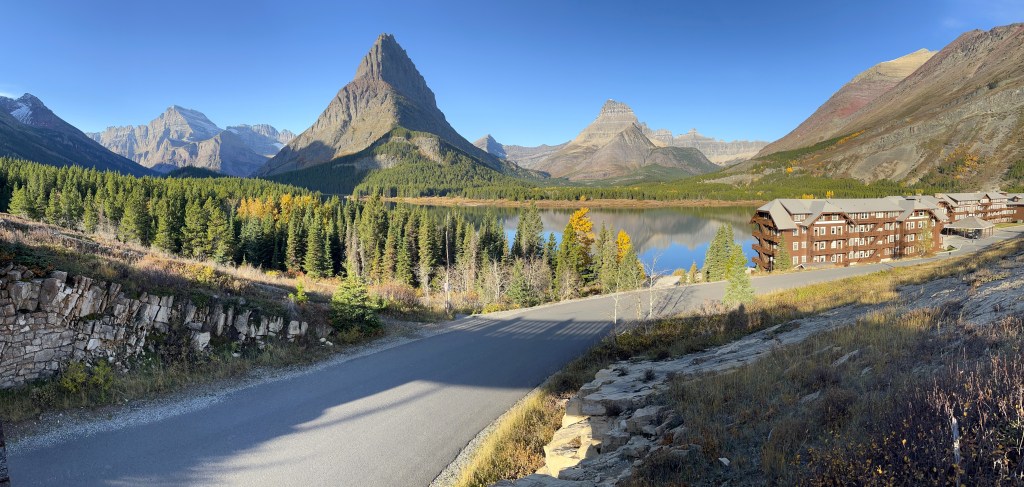
Our boondocking spot just outside Glacier National Park was safe and quiet and extremely cold. After coffee in the van, I opened the sliding door to a slap-in-the-face 31 degrees F. We quickly made the decision to get dressed, drive to Apgar Visitor’s Center, park in the lot and make breakfast there. It was a good idea, as we had a flat surface to make food and a set of warm bathrooms with flush toilets which were open even though the Visitor’s Center was not.
Glacier National Park is a national park located in the northwest corner of Montana along the spine of the Rocky Mountains, adjacent to Waterton Lakes National Park in Canada. The park encompasses more than 1 million acres and includes parts of two mountain ranges, more than 130 named lakes, more than 1,000 different species of plants, and hundreds of species of animals. The park is known for its seemingly endless acres of rugged and breathtaking landscapes. With over 700 miles of trails, Glacier is a paradise for adventurous visitors seeking wilderness steeped in human history.
The Road to the Sun
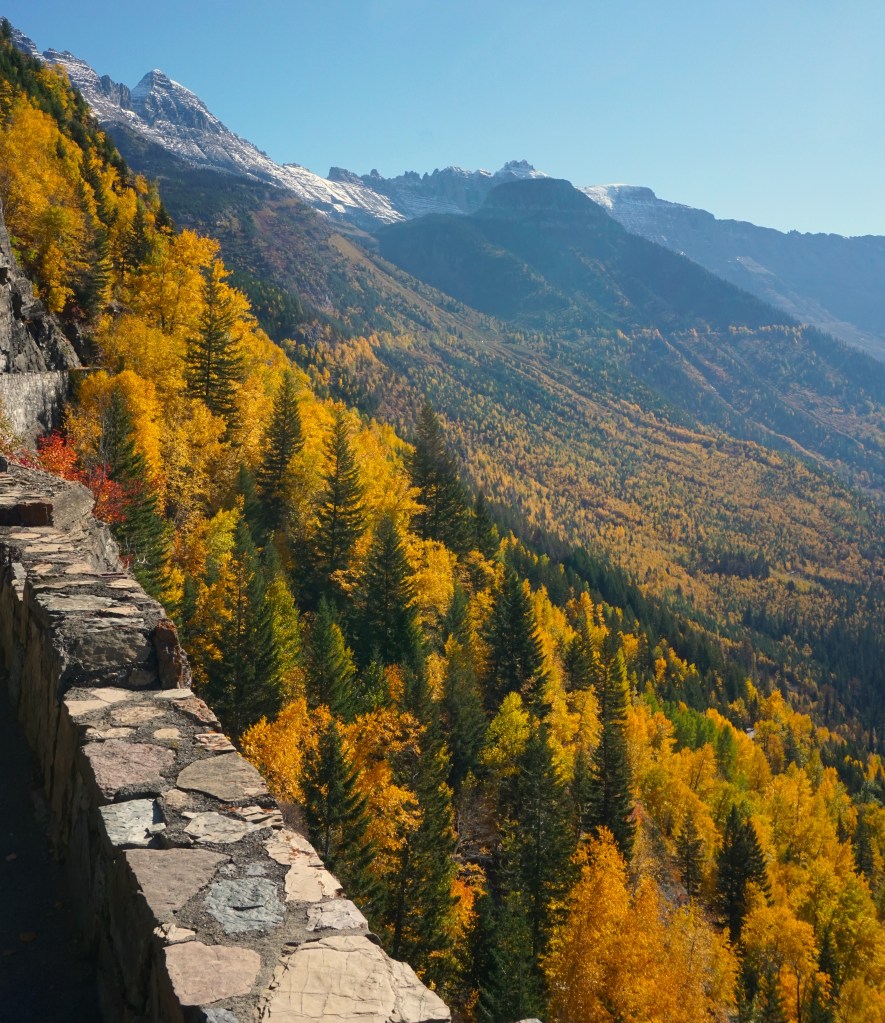
Going-to-the-Sun Road is a scenic mountain road in Glacier National Park. We had been looking forward to this drive for a long time, but we were worried that it would be closed by the time we arrived at the park. The Going-to-the-Sun Road has a hard closure date of October 15 this year, but it can be closed earlier if winter arrives. We are in luck with a beautiful weather window. Although it was freezing cold in the morning, the day warms into the 60’s and 70’s later in the afternoon. Going to the Sun is the only road that traverses the park and crosses the Continental Divide at Logan Pass, which is the highest point on the road at 6,640 feet or 2,025 meters in elevation.
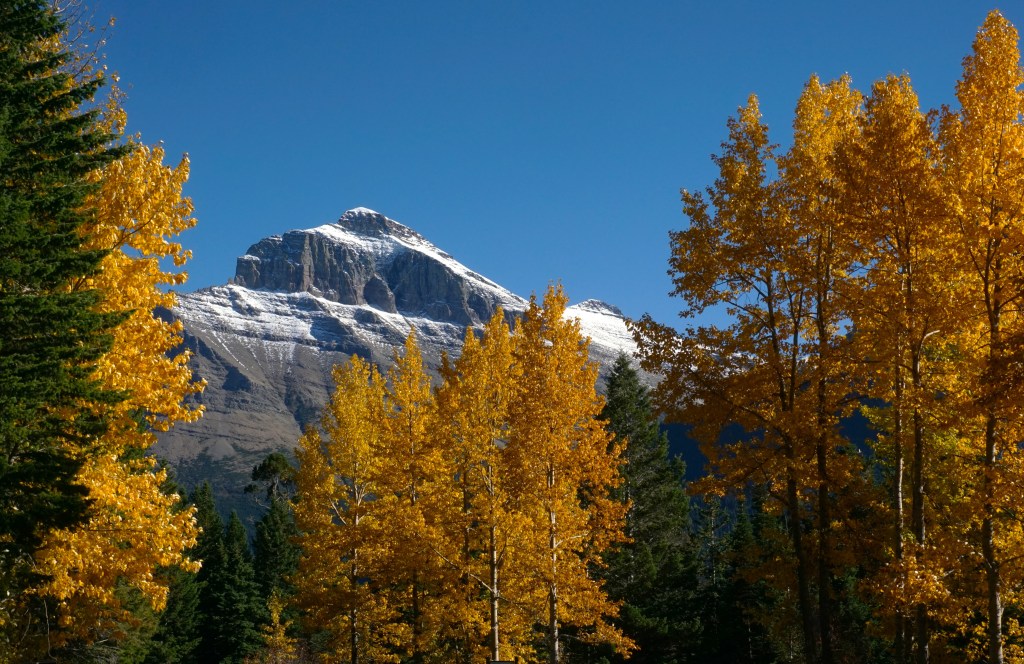
The road spans 50 miles (80 kilometers) and offers views of glaciers, valleys, waterfalls, mountains, and in the Summer months, wildflowers. We have learned that construction of the road began in 1921 and was completed in 1932. The road is named after Going-to-the-Sun Mountain which dominates the eastbound view beyond Logan Pass. One Native American legend concerns the deity Sour Spirit who came down from the sun to teach the Blackfeet the basics of hunting. While returning to the sun, an image of Sour Spirit was placed on the mountain as an inspiration for the Blackfeet. Another story has suggested that a late-19th-century Euro-American explorer provided the mountain’s name and the legend. Either way, we found the road to be a can’t miss adventure in Glacier National Park.
The road is notable as one of the first National Park Service projects specifically intended to accommodate automobile-borne tourists. It is both the only link between the east and west sides of Glacier National Park and the only extensive automobile route in the park. The road defines Glacier’s basic circulation pattern and receives heavy amounts of traffic during summer months. Although we did not face too much traffic in the month of October, it was still a scary and exposed drive for those who have a fear of heights.
Hiking Trails in Glacier National Park

We made use of many little trails campground tours while walking Jessi, our Lab Shorthair mix adventure dog, but our four main hikes during our time in Glacier were Avalanche Lake, Highline Trail, Hidden Lake Overlooks and Grinnell Glacier Trail.

Avalanche Lake trail is about 4.5 miles long and has an elevation gain of 741 feet. The trail begins at the Avalanche Lake Trail Head which is a large parking lot just past the nine-mile point on Going-to-the-Sun Road. Early on, there is a fast flowing creek which has carved beautiful, flowing paths into the reddish-brown argillite and quartzite rock that was compressed under sea water and exposed to oxidation. We had the trail to ourselves at first, but soon we had to share the trail on the way down with what seemed like busloads of tourist. This is a common issue with the easy, but beautiful trails we hike.
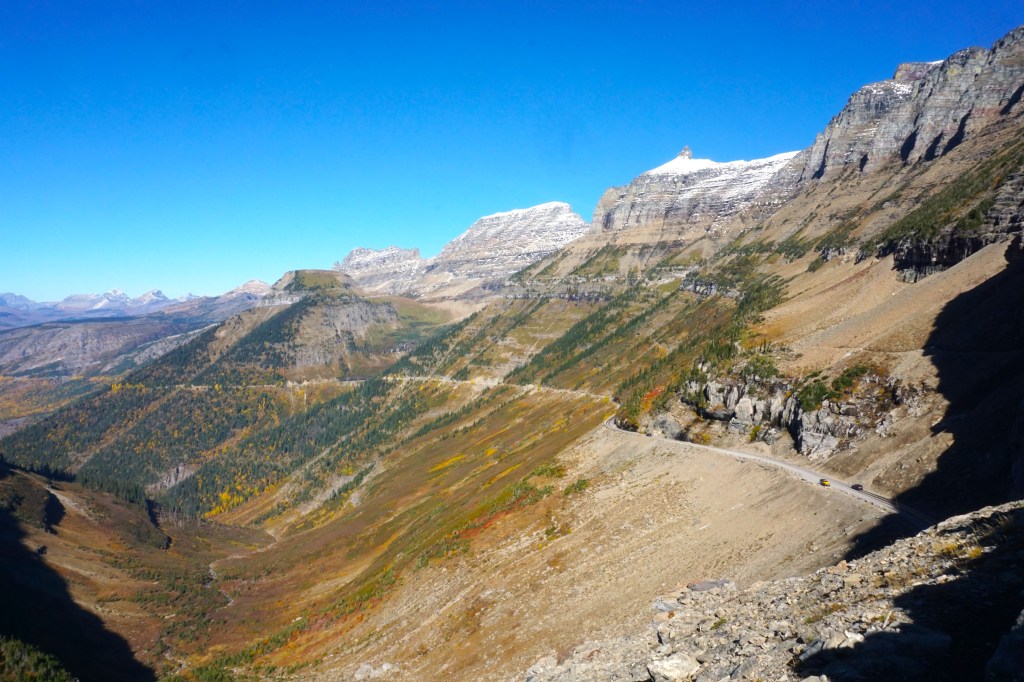
Later in the day, when we reached Logan Pass, we found a parking spot and did a partial trek on The Highline Trail and the full length of the Hidden Lake Overlook Trail.

Both of these were spectacular and highly recommended. The highlight hike of our three day stay in Glacier National Park however, was the Grinnell Glacier Viewpoint Trail.

After our drive over the Continental Divide and over to the East side of the park, we were able to secure a campsite in Many Glacier Campground for just $10 per night. As the camp was basically shut down for winter – with no services, or water or open bathrooms… it was highly discounted. After a relaxing morning and a hearty breakfast, we set out to make it to the end. The trail would be 12 miles from our campsite and a steep, lose, and often cliff-side 2,600 feet of elevation gain on the way up. This is the kind of trail which is far less populated with casual tourists.
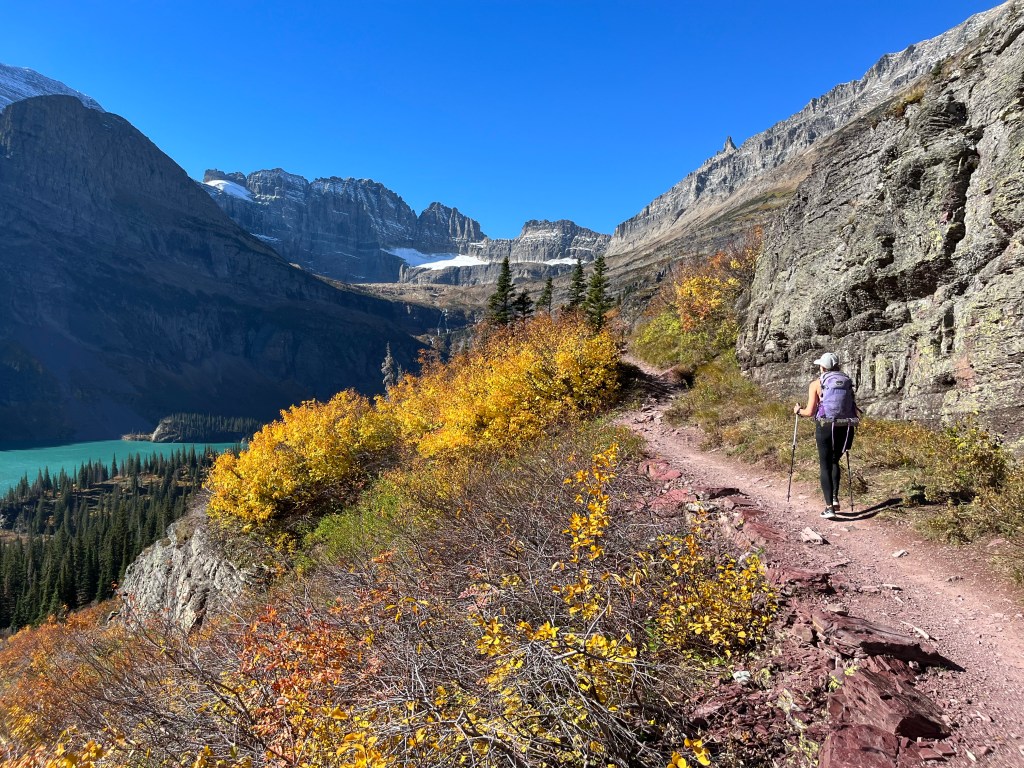
The glacier-fed lakes and the red and yellow fall colors are magical and as the air thins out and the climb gets steeper, our spirits are lifted by the sheer radiance of the scene. After more than three hours of climbing, we reach Grinnell Glacier and the grey, silt-filled lake which floats its calved icebergs. We are tired, but we lay out on the hard rock surface like it is a king-size bed and rest. The sun is hot and the wind is cold here. We are troubled about what to wear, as we are both feeling sunbaked and frozen at the same time.
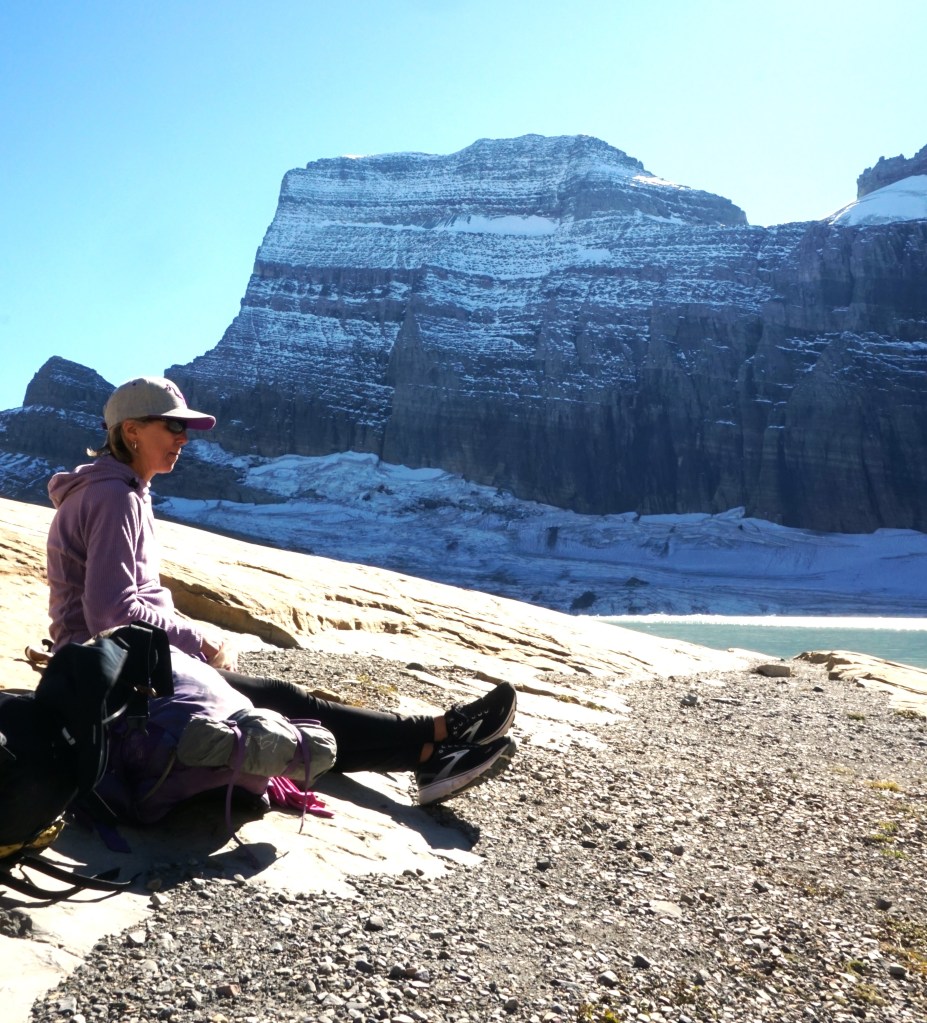
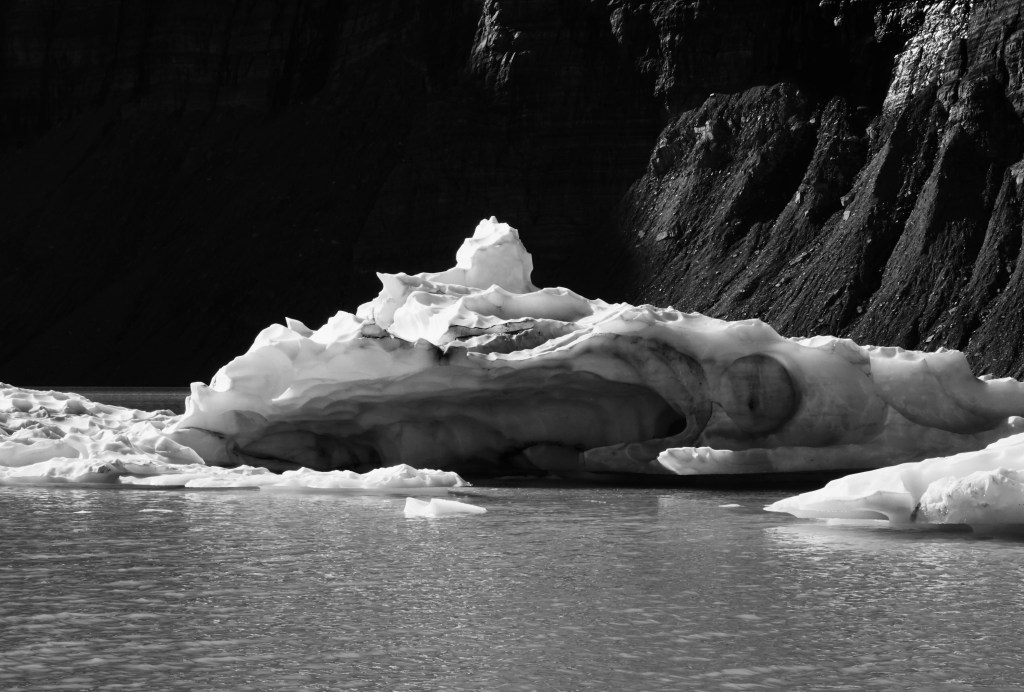
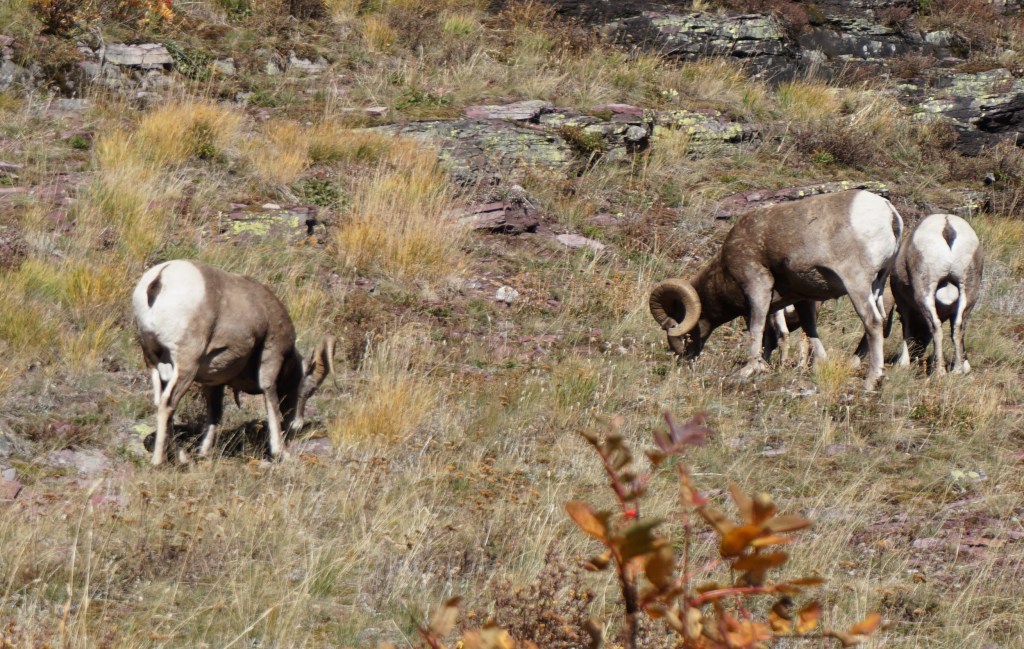
We munch on energy bars, an apple and electrolyte infused drinks for lunch and then gear up to make the six-mile downward trek to camp. Just when the pain begins to set in deeply and for a few days to come… we run into some big horn sheep and take a long break to enjoy their beauty and chuckle at their indifference to us.

The last mile of the hike is painful for me. I seem to be hurting from every joint and muscle. It is a struggle to make it back to camp. CT encourages me well and I trudge on. Back at camp we set a big fire and enjoy a delicious meal and a good bottle of wine as the sun sets behind the mountain. The golden leaves of the aspens which surround our camp have fallen on our site all day and leave a thick bed of color coating our van and picnic table. It is gorgeous. It is our last night in Glacier National Park. We are glad we came.
 Left Coast Footprints