

Featured in Black and White.
Several inches of fresh snow fell on Yellowstone National Park today. It was hitting our van’s windshield as we approached the park from the north, after leaving the beautiful town of Bozeman, Montana. By the time we past the gates of the West Entrance however, the snow has turned to slush and our campsite in Madison Campground was covered in a gigantic Slushy of white, muddy goo. Rather than fighting the mess, we headed out to see the park and experience the snow and the lack of crowds in America’s (make that the world’s) first National Park.
Both of us have been to Yellowstone National Park before. CT can’t remember when, but I do know that I have been here at least two or three times. Twice, I believe, as a teenager and once more about 28 years ago. For both of us, our previous experiences were filled with hot summer days and large crowds of people and cars clogging the roads.
Yellowstone Cold and Snow
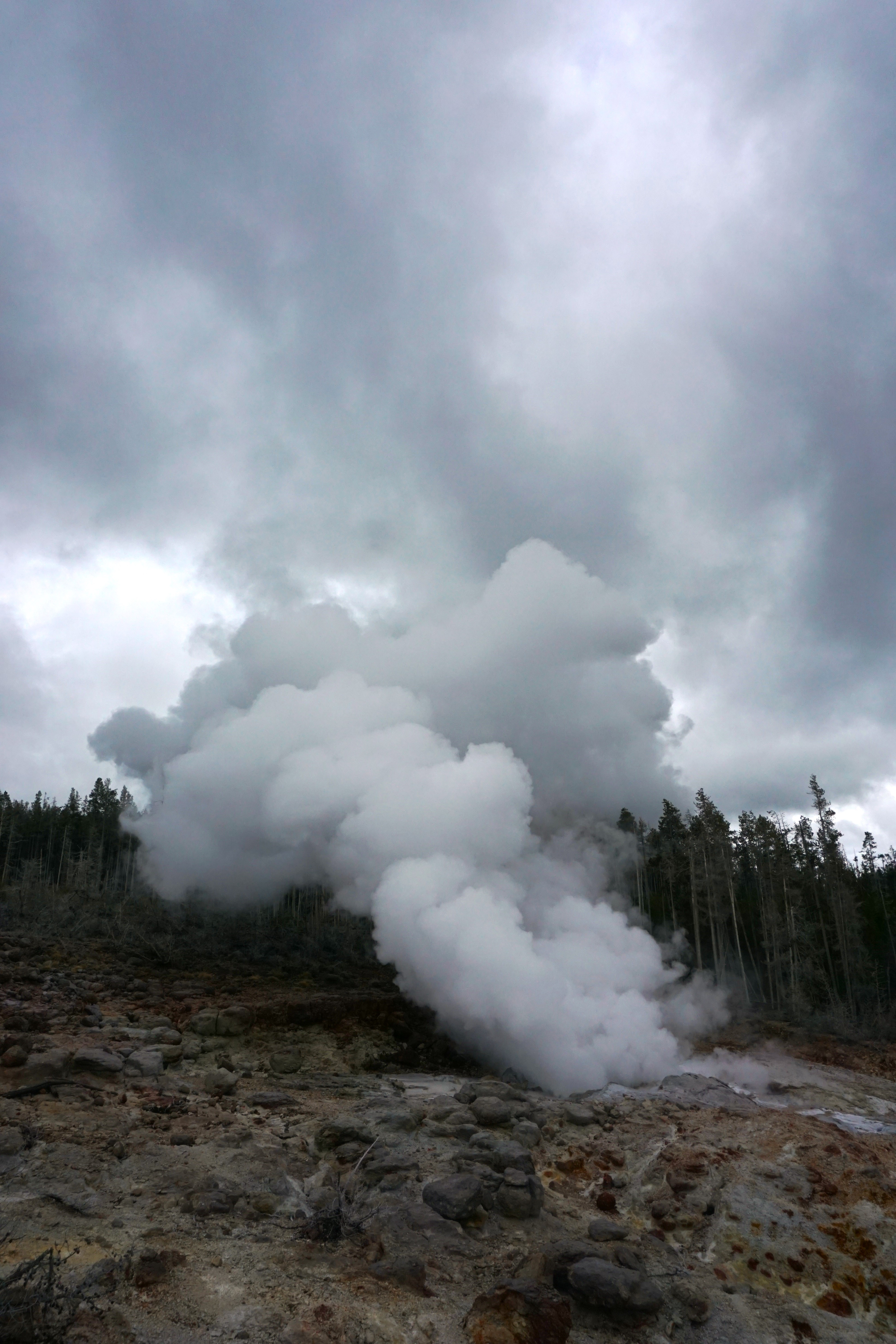
On our first day in the park we toured several of the geyser basins, the upper and lower falls of the Yellowstone River and the Grand Canyon of the Yellowstone. Because of the snow and the near freezing air, the steam coming out of the fumaroles, geysers, waterfalls, and water pools was greatly enhanced by the temperature difference. Geyser basin steam is huge and can be seen many miles away.
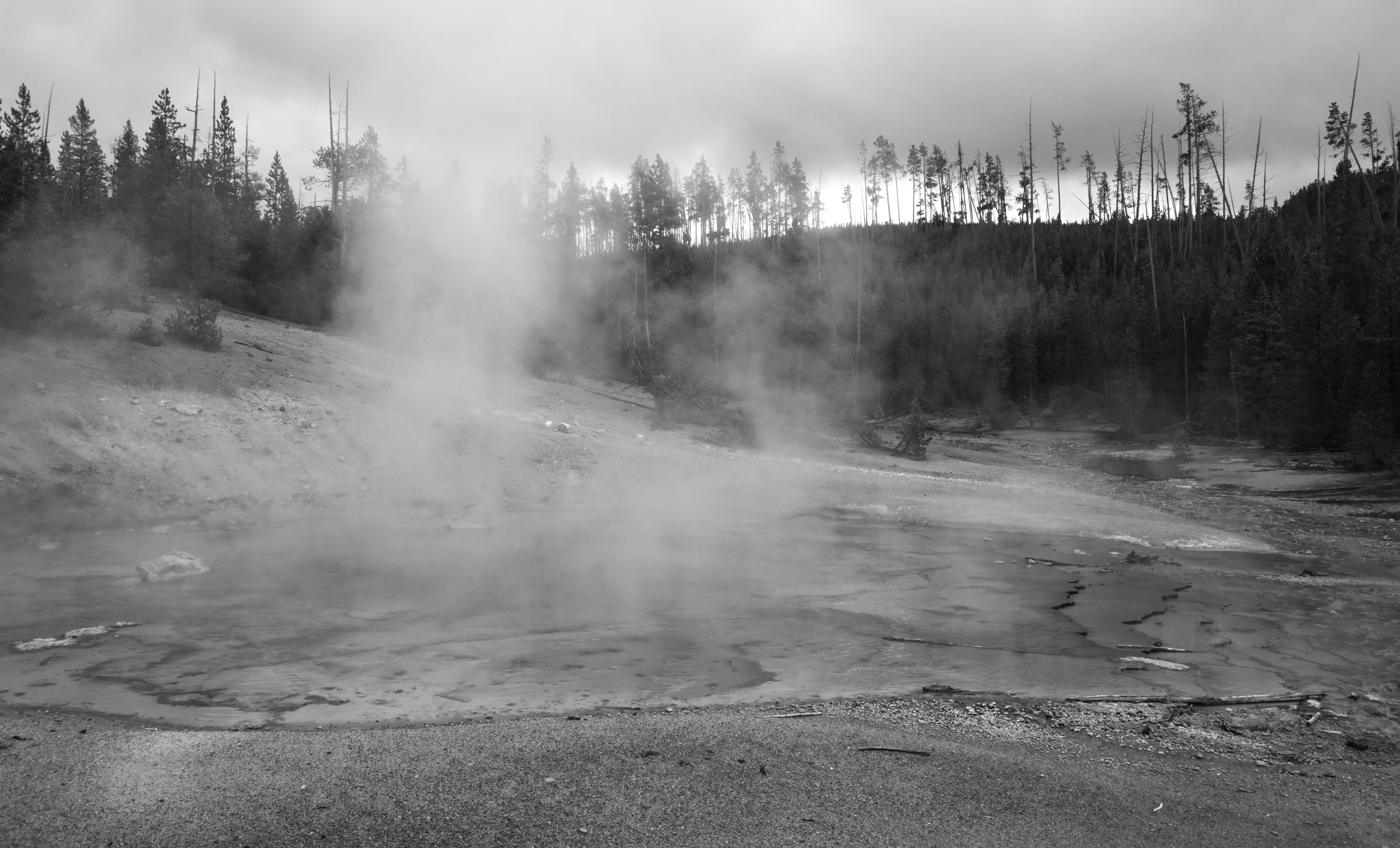


On both sides of the canyon, the north rim and south rim, we hiked and stopped to take in the beauty and take some photos. The winter weather kept the crowds away and we had several of these lookouts to ourselves. We were concerned, however, that the cold and snow were keeping Yellowstone’s famous animals hidden up in the trees for shelter as we were not seeing any of them for quite some time. Later, on day two, the animals began to come out a little bit.
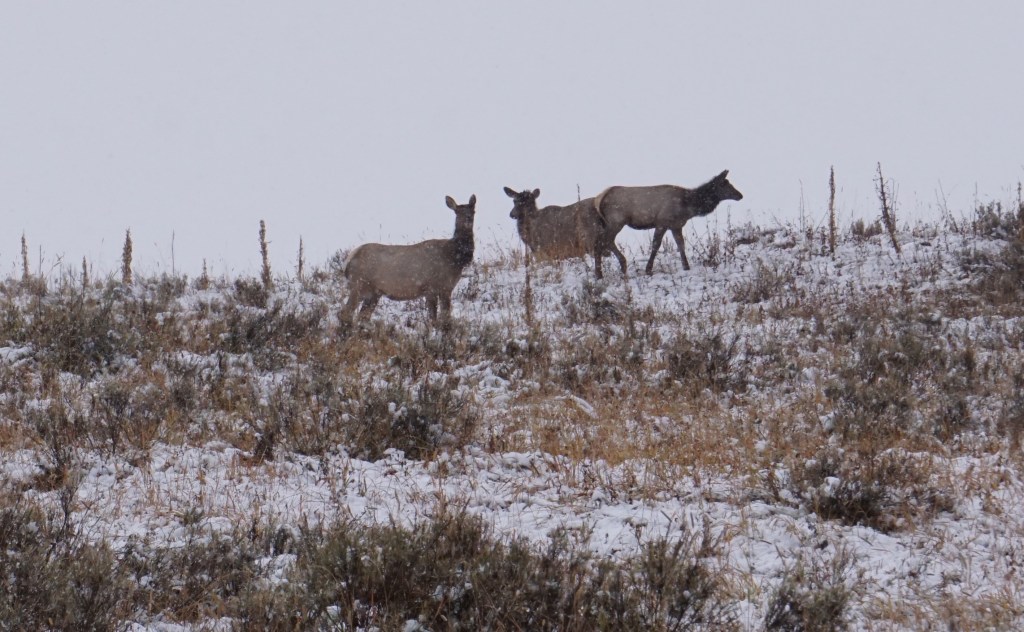
Finally, some famous Yellowstone animals
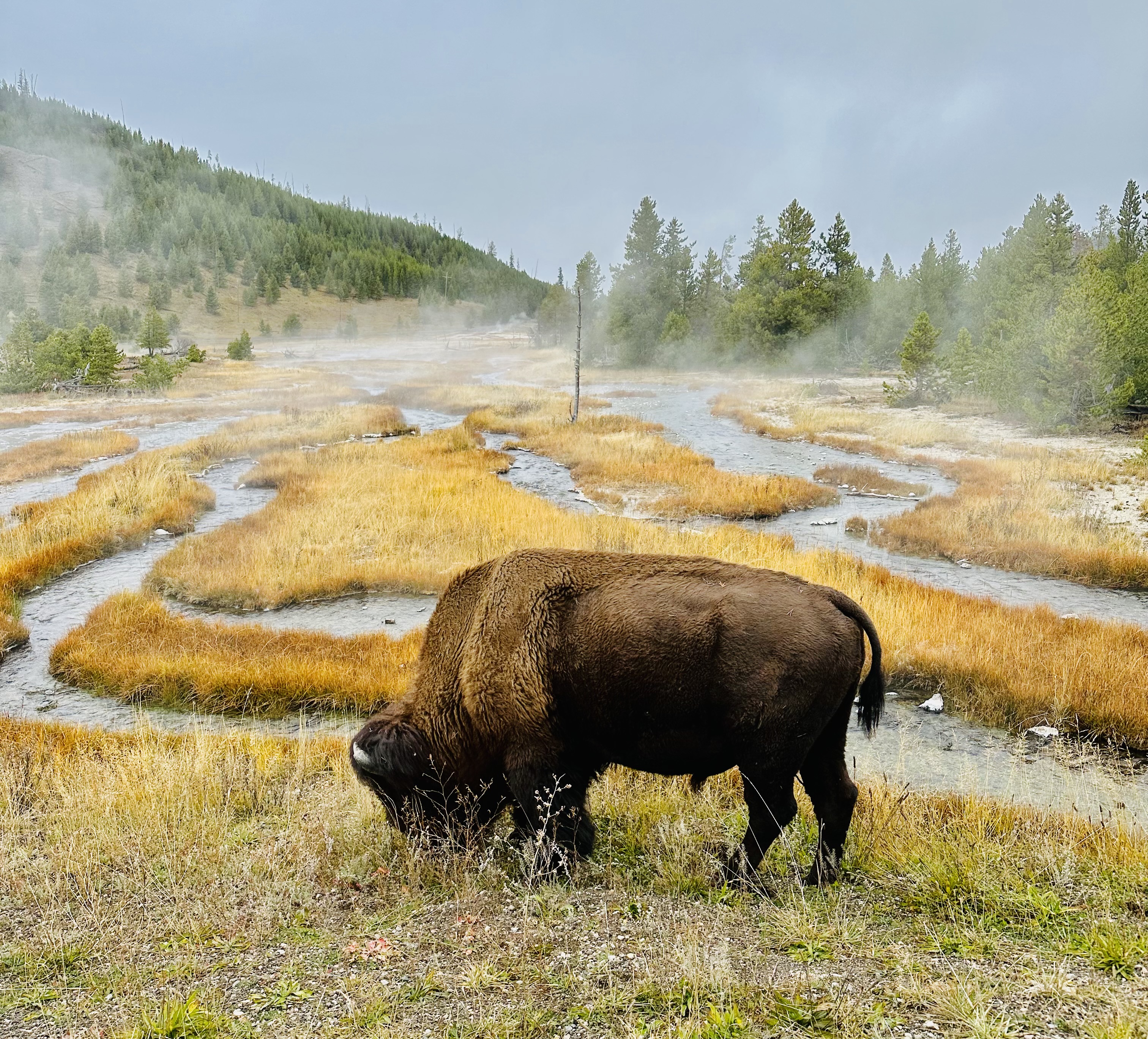
During a hike on the second day we spotted a herd of elk on the top of a ridgeline. But when we arrive at Hayden Valley, where the large herds of bison, elk and other creatures are supposed to be in abundance, the open fields are completely empty. It is beginning to be a big disappointment until suddenly along the roadside and in some distance geyser basins see some bison close by.


A Disappointing Old Faithful

The most popular attraction in Yellowstone National Park has always been “Old Faithful” Geyser. It is one of the most famous geysers in the world. It was named by the Washburn Expedition of 1870, who explored the area that would later be called Yellowstone. Members of the expedition entered the Upper Geyser Basin after traveling down the Firehole River and saw the geyser, which they called Old Faithful because of the regularity with which it erupted. On my previous visits to Yellowstone, I was in awe of the huge geyser. This time, however, it was a surprise and a disappointment. My past experience was that Old Faithful was highly predictable, erupting every hour or so, on average. Its maximum height ranges from 90 to 184 feet. It is also known that the water which erupts from Old Faithful has been measured at 204°F while the temperature of escaping steam can be hotter than 350°F. This time the geyser seemed to have a bad case of blasé. The geyser seemed indifferent to the fact that hundreds of spectators had driven many miles to see it and it performed poorly. It spouted off near 30 minutes past its predicted time and shot a mere 30 to 40 feet in the air. Some people got up and left before the performance was even over – like a disgusted audience at a lousy movie. I felt like doing the same after sitting on a cold bench for 40 minutes in 36 degree weather.
According to some experts, it has been acknowledged that in recent years the interval between Old Faithful’s eruptions has been getting longer. In the 1960s, the average interval between eruptions was 66 minutes, quite a bit shorter than today’s 91 minutes. It is uncertain what is causing the change. The National Park Service attributes lengthening intervals to earthquake activity, which can affect the structure of the water system below ground. Other possibilities include changes to the water table, climate change, or human activities like water diversion and construction projects.
Whatever the case may be, if Old Faithful continues to be as lackluster as this last time, the appeal of Yellowstone National Park may be lessened somewhat.
Yellowstone Lake

On our way out, to the south exit, enroute to Grand Teton National Park, we stopped for lunch at Yellowstone Lake. We were lucky to find a completely empty beach to picnic and let the dog run wild alone the shoreline to get the wiggles out. The water was a gray-black as it was reflecting the snow and rain filled clouds in the sky. For more than an hour we had this large expanse of volcanic sand near the boat house to ourselves. It is hard to imagine this could ever happen again.
 Left Coast Footprints